
Psychoeducational & school readiness assessment
Understanding how a child learns, and whether they are ready for the demands of formal schooling. Written in plain language, so you can work out what may fit your child before you phone.
Understanding how your child learns
A psychoeducational assessment provides a comprehensive understanding of how a child learns. It looks at the relationship between cognitive abilities, memory, attention, processing skills and academic performance to identify both strengths and areas that may be creating barriers to learning.
The aim is not simply to identify what a child struggles with, but to understand why they may be experiencing difficulty and what support will help them reach their potential.
Signs your child may benefit from an assessment
Children who experience learning barriers do not always struggle in obvious ways. Some children are bright and work exceptionally hard to compensate for areas of weakness. As academic demands increase, however, these difficulties may become more noticeable.
You may notice that your child:
| What you may notice | What this can look like |
|---|---|
| Works hard but does not achieve expected results | their effort does not seem to match their marks. |
| Performs inconsistently | they may demonstrate good understanding verbally but struggle to show the same knowledge in written work or tests. |
| Avoids schoolwork | homework may become a source of frustration, resistance or anxiety. |
| Struggles to stay focused | they may lose track of instructions, forget what they need to do or become easily distracted. |
| Takes much longer than expected | simple tasks may require excessive time and effort. |
| Struggles with specific academic skills | such as reading, spelling, writing or mathematics. |
| Becomes overwhelmed by increasing academic demands | particularly when tasks require several steps or the simultaneous use of different skills. |
What does a psychoeducational assessment examine?
A psychoeducational assessment looks at several areas that work together to influence learning.
| Area assessed | What it covers |
|---|---|
| Cognitive abilities and intelligence | We assess areas such as verbal reasoning, non-verbal reasoning, problem-solving and logical thinking to develop a picture of how your child understands and processes information. |
| Academic achievement | Your child’s current academic skills are assessed in areas such as reading, spelling, written language and mathematics. This helps us determine whether their academic performance is in line with their underlying abilities. |
| Memory | We examine different aspects of memory, including working memory — the ability to hold information in mind and work with it while completing a task. Working memory plays an important role in following instructions, solving problems, reading and learning. |
| Processing speed | Processing speed refers to how efficiently a child can take in, process and respond to familiar information. Difficulties in this area can affect classwork, copying, written work and completing tasks within the available time. |
| Attention and executive functioning | Where appropriate, we consider skills such as sustained attention, planning, organisation, self-monitoring, impulse control and task completion. These skills are essential for managing the demands of the classroom and independent learning. |
Understanding your child’s learning profile
A psychoeducational assessment is not about labelling a child. It is about understanding the individual child behind the marks.
Every child has a unique pattern of strengths and challenges. By identifying how your child thinks, learns, remembers, concentrates and performs academically, we can develop a clearer understanding of their learning needs.
The assessment findings can then be used to guide appropriate recommendations, targeted intervention, classroom support and, where necessary, applications for additional educational accommodations.
Empowering your child’s learning journey
When we understand how a child learns, we are better equipped to help them learn with confidence.
Where appropriate, the assessment may also provide supporting recommendations for educational accommodations, such as additional time, a reader, a separate venue or other appropriate concessions, based on the learner’s identified needs and functional difficulties.
A psychoeducational assessment can provide parents, teachers and other professionals with valuable insight into your child’s strengths, areas of difficulty and the support they may need to reach their potential.
The goal is not simply better marks. It is helping your child understand their own strengths, overcome barriers to learning and develop the confidence to succeed.
Is your child ready to start school?
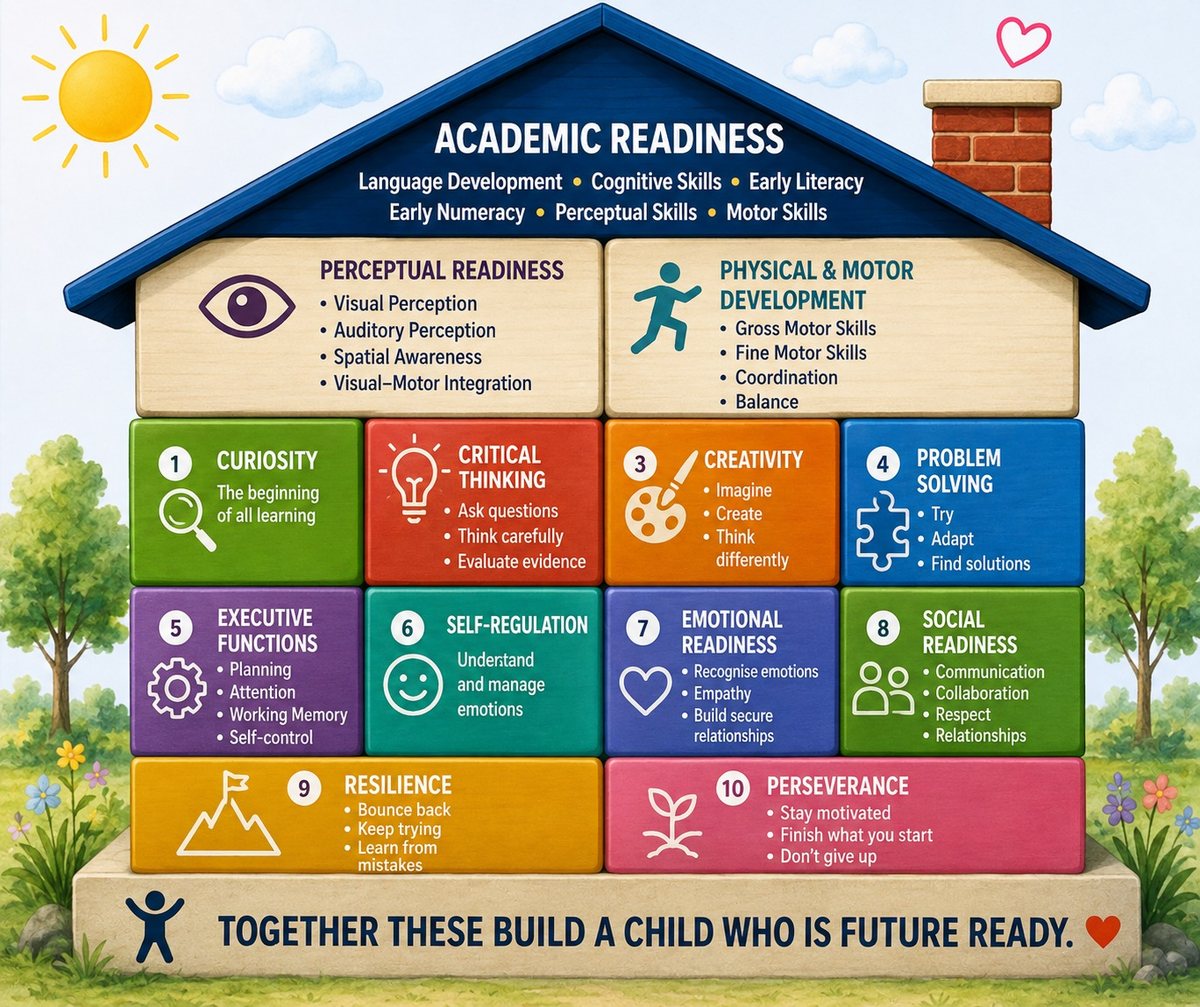
Starting school is an important developmental milestone. School readiness is about much more than knowing letters and numbers. It is about whether a child has developed the cognitive, language, physical, emotional, social and self-regulation skills needed to participate successfully in a formal learning environment.
A school readiness assessment provides a comprehensive picture of your child’s current development and identifies the strengths and areas that may need further support before entering Grade 1.
What do we assess?
A school readiness assessment looks at the foundational skills that support successful learning, including:
| Area of readiness | What it covers |
|---|---|
| Cognitive readiness | Reasoning, problem-solving, concept development, memory and the ability to learn and apply new information. |
| Language and communication | Understanding and expressing language, vocabulary, listening skills, following instructions and communicating effectively. |
| Early literacy and numeracy | Foundational skills that support reading, writing and mathematics, including sound awareness, visual discrimination, number concepts and early mathematical thinking. |
| Attention and self-regulation | The ability to listen, concentrate, wait, shift attention, manage impulses and remain engaged with a task. |
| Fine- and gross-motor development | Hand strength and control, pencil skills, visual-motor integration, coordination, balance, body awareness and other physical skills required for classroom participation. |
| Social and emotional readiness | Confidence, independence, emotional regulation, interaction with others, coping with frustration and the ability to separate from caregivers and participate in a group. |
| Executive functioning | Early planning, working memory, task initiation, following routines, completing tasks and managing simple multi-step instructions. |
School readiness is not about being “perfectly ready”
Children develop at different rates. A child may be very strong in one area while still developing another.
The purpose of a school readiness assessment is therefore not to decide whether a child is “good enough” for school. It is to understand the child’s developmental profile, identify potential barriers to learning and determine what support may help them make a confident transition into formal schooling.
The assessment can provide parents with practical recommendations regarding school placement, readiness for Grade 1, areas requiring further development and strategies to support the child’s transition into school.
Giving your child the best start
The goal is not simply to prepare a child to cope with Grade 1. It is to give them the foundations for learning, confidence, independence and successful participation at school.
A school readiness assessment helps us understand where your child is now, what they are ready for, and what can be done to support their development before they begin formal schooling.
Support for learners who face barriers under standard assessment conditions
Support for learners who experience barriers that may affect their ability to demonstrate their knowledge and skills under standard assessment conditions.
Following an appropriate assessment, we provide professional documentation and motivation to support applications for examination and educational accommodations, where indicated.
This may include recommendations for accommodations such as:
| Accommodations that may be recommended |
|---|
| Additional time |
| A reader or other appropriate support |
| A separate venue |
| Spelling-related accommodations |
| Other accommodations relevant to the learner’s identified needs |
Reports and supporting documentation can be prepared in accordance with the relevant requirements of schools, the IEB, Impaq and the relevant provincial Department of Education.
Each recommendation is based on the learner’s assessment findings, functional difficulties and individual educational needs. Approval of accommodations remains the responsibility of the relevant educational authority or examining body.
Report
A written report with clear recommendations after an assessment, provided to the parents.
Not sure where to start?
Start with a short WhatsApp or phone call. A brief initial conversation is enough to understand your concerns and determine whether an assessment or therapeutic support may be appropriate.